Bridget Kennedy: upcoming artist-in-residence

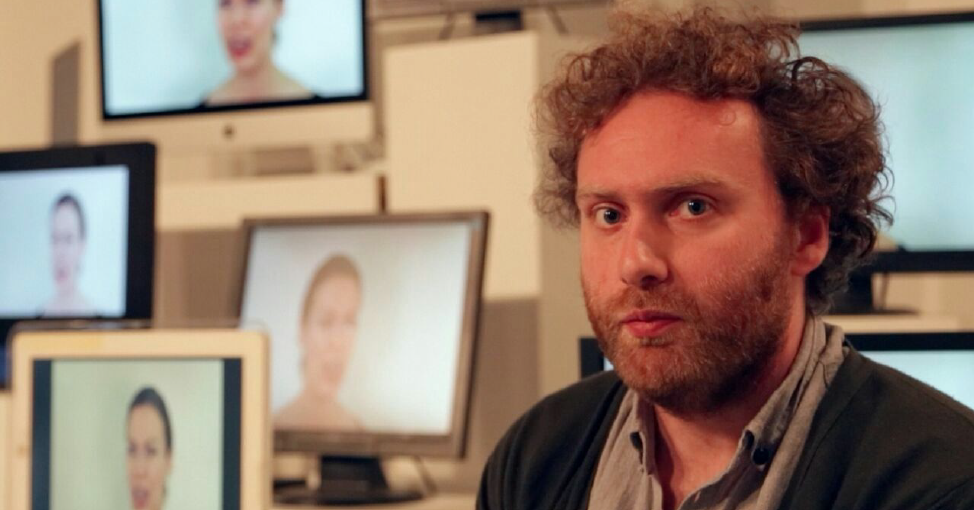
Bridget Kennedy in her workshop, 2016

Sydney based artist Bridget Kennedy has a background as a painter and contemporary jeweller. She works with diverse, non-precious and organic materials combined with traditionally precious materials. Her exhibition work is an ongoing enquiry into environmental fragility, impermanence, choice, social expectations and value. Bridget's emphasis on materials and exploration allows the physical act of making to partly drive the outcome. 


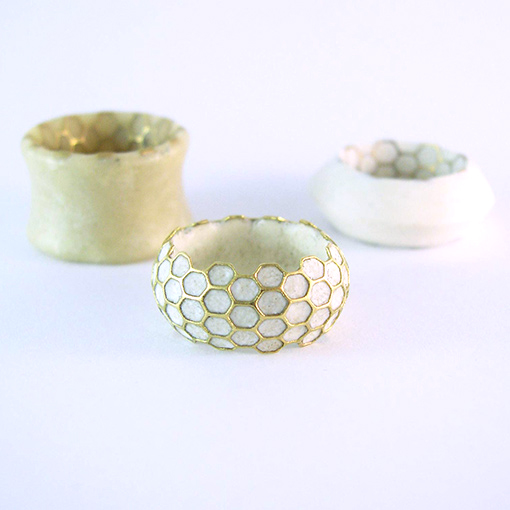
Bridget Kennedy, It’s as simple as…white, 2015, 
beeswax, pigments, handspung co0on cord

Bridget began studying painting in the 1980s, before diverting a corporate career and then returning to pursue her art practice full time in 2003, completing an Advanced Diploma in Jewellery and Object Design in 2005. The following year she was the inaugural recipient of the Enmore Design Centre's Jewellery and Object Design Award. In 2008 Bridget co-founded Studio 20/17, a contemporary jewellery gallery and workshop based in Waterloo, Sydney. She has been an active member of Jewellers and Metalsmiths Group of Australia (JMGA) over the past five years, holding various roles of treasurer and secretary. Last year Bridget co-ordinated the 2015 JMGA conference held at Sydney College of the Arts. She has been a finalist in the Toowoomba Contemporary Wearables Biennial Jewellery Award and was awarded first prize in Graduate Metal X. In 2010 she was artist-in-residence at Bundanoon Trust NSW and at Hill End NSW in 2015. Bridget has held numerous solo exhibitions and participated in group shows around Australia and in Thailand, New Zealand, USA, and Japan. In 2015 she completed her Masters in Studio Art at Sydney College of the Arts.

Bridget Kennedy, choice mate, 2015, beeswax, pigments, soil, found objects, 
gold leaf, fools gold and an ounce of gold

I am intrigued by the social interstice between audience and object and the potential of the participatory object to act as a mediating role in developing human relationships and social action, specifically in the area of social and environmental impacts of resource usage and sustainability. My practice aims to explore this through ideas of impermanence and materiality, the cultural and material value we attach to objects and the potential for the object to navigate both the public and private spheres. I am interested in using the residency to take these ideas further. My time at Gunyah would be spent reading various theoretical texts and consolidating the research areas that I’ve been exposed to recently. Time would be spent sitting quietly in the bush, listening and observing. I would use the time to explore the local environment and make silicone moulds of various flora in the local environment to be later used for creating beeswax elements of a larger work.
Bridget Kennedy, in memory of bees, 2012, beeswax, 18ct gold

To find out more about Bridget's practice and see more of her work please go to her website bridgetkennedy.com.au


Tracey Coutts: artist-in-residence June 2016

The Gunyah residency was a much needed time out and escape from the weekday school drop off/pick up, weekend extracurricular activity run arounds and the daily maintenance of accumulated mess that a family of four can too easily make.  A solo drive from Geelong to North Arm Cove was surprising easy, I found a café in Bargo that had great pies, the hills and trees around Sydney were a pleasing contrast to the flats around Melbourne and the craziness of Sydney drivers equally reflecting Melbournians on the approach to city turn offs, making me feel right at home.

Tracey Coutts, Gunyah jetty - looking out, June 2016

The first week of my Gunyah residency I had to myself, a very peaceful and clarifying experience.  My time coincided with the July 2, 2016 election battle in full swing, with an early submission I could switch off and focus, no TV or Wi-Fi distractions, not even FM radio.  I had with me a collection of five CDs loaded in the CD stacker, two albums in particular I hadn’t listened to much at home bring me back to the evening log fires relaxing after dinner in the lounge, there was no background noise to drown out the array of intricate instrumental sounds, you could hear the full, layered textures of the music.

Tracey Coutts, Surface tension, digital drawing,  June 2016

Set up in the studio downstairs I found it to be a very productive atmosphere, a light, open space.  The clouds rarely hung around for long, sweeping across the sky.  There were a couple of visits from wallabies in the back garden, the birds were particularly chirpy during the day, and the sunshine was a welcomed change to the drab grey that had set-in back home in southern Victoria. 

Tracey Coutts, Great inspiration, photograph, June 2016

The water in the bay caught most of my creative attention, more than I had expected.  Some days it was rather choppy with a few dolphin sightings that kept you looking out for more. Other days were calm and still but between these varying degrees when the tension on the water was only slight, I could see the idea of the tension affecting a gridded surface.  Pressures from the air pushing in one direction, the currents beneath stirring up in another.  

Tracey Coutts, Tension square series, digital drawing,  June 2016

With this idea I hit the studio pretty hard and focused on a range of five sequences that could ‘program’ a sea of change across a grid to varying degrees.  Using a smaller grid I had played with the pulling of nodes across connecting lines to instigate the push/pull action.  Spending a couple of solid days to nut out these ideas and arranging formats to use with additional software cleared a bit of time to spend with my partner and daughters during the last four days exploring the local area.  I am pleased to have visited Stockton beach which is the biggest beach I have ever seen, topped off with a nice coffee, ice cream and a bit of whale watching at the café there.  The work I have been able to achieve will continue, finalizing prints and expanding of the ideas further.  The Gunyah has been a great creative experience and a wonderful sight-seeing venture to a rather unique area of our coast.


Tracey Coutts
Gunyah residency report
 June 2016

-
To see more of Tracey's work please visit www.langford120.com.au

Dean Cross: upcoming artist-in-residence

Dean Cross, Repose (reclining man with sandwich), 2015, image credit Kai Wasikowski

Dean Cross is a descendant of the Worimi nation and currently based in Sydney studying a Bachelor of Visual Arts at Sydney College of the Arts. Dean's visual arts practice builds on his extensive international career as a contemporary dance choreographer and performer. Now his work encompasses video, performance, painting, print-making, photography and sculpture in the expanded field. Dean’s work looks to investigate, comprehend and critique the world we live in, addressing socio-political and cultural norms while reinvigorating them with contemporary understanding. His work often draws on his Indigenous ancestry to interrogate our post–colonial epoch, with a burning desire to understand what it means to be a 21st Century Australian. Last year Dean was a finalist in the Konica Minolta Redlands Art Prize, and his work Right Lands was awarded the 2015 Macquarie Group Highly Commended Emerging Artist Prize judged by the eminent Australian artist Joan Ross. This year Dean has been selected as a finalist in The Churchie National Emerging Art Prize.

Dean Cross, The things I’ll never do, and Structures and Sadness, 2015
Gouache, felt tip pen and stickers on archival cotton paper, 51x35.5cm each


During my residency at Gunyah I intend to create a series of mono-prints and gouache paintings which investigate and embody tidal rhythms. I will use time and tide as meta-motifs for the continually changing cultural and socio-political environments both locally and globally. Also, I will begin preparatory and explorative research into new video work examining my ancestral roots within the Worimi Nation. This will include drawing on my background in contemporary dance to create video-portraits where the distinction between country and person is erased, as is common within Indigenous culture. This residency will provide a unique opportunity for me to create on country, and begin to undo the trauma of displacement and disconnect. I will be able to re-connect with my deepest roots and, through art, commune with ancestors long since past.


Dean Cross, 18 Stanger’s and a Long Lost Aunty, 2014, HD video still, 18:34, view the full video here


See more of Dean's work on his website - deancross.com

Ollie Bown and Ben Carey: artists-in-residence June 2016

Ollie Bown and Ben Carey on the Gunyah jetty, June 2016
We arrived at Gunyah with winter setting in. Soon we had our makeshift digital music studio set up in the living room, facing out to the harbour: two laptops, a pair of studio monitors, a few mics, a small array of synths and Ben’s alto and tenor saxes. The winter-hideaway atmosphere of the wood cabin instantly announced its offering of creative juices — a roaring stove, bangers on the grill and a stock of wine and whiskey, a short descent to the jetty through the crisp winter air and crackling fallen leaves. Working into the first night we knocked up an array of raw material for our composition, and by the end of day two we had spread this out into a full 45 minute skeletal arrangement, puzzled at the possibility we might really produce 45 minutes of studio music in two weeks. This flow continued; essential ‘regular’ work during the day, dinner and intensive studio work into the night, some sax lines recorded against the warm acoustics of the timber cabin, a couple of essential work trips back down to Sydney, getting intimately familiar with the wrinkles of the M1 whilst making ‘field recordings’ of rumble strips, or listening to draft mixes of the track, to make best creative use of the time.

Ollie Bown and Ben Carey, Sound recording gear on the Gunyah jetty, June 2016

Our residency was punctuated by the 2016 East Coast superstorm. Plans for mind expanding winter hikes and kayaking during the weekend were replaced by an all out weather warning lock-down, nervously pondering the stability of nearby trees and the building’s very own foundations. We were reassured by the documentation of its construction by hardy bare chested Aussies of the 60s or 70s variety in faded photos on the kitchen wall. Another trip down the M1 was rescheduled to avoid the Sunday night brunt of the weather, the skies cleared, and lunches on the jetty were resumed. One moment of harbourside ultra-serenity, biting into a ham sandwich, was taken to perfection by the sudden splash of a dolphin fin, meters away, then a scattering of others at 20 second intervals drifting into the distance, all set against a backdrop of pelicans and a hovering eagle. We fumbled our phones and pondered the possibility of putting our land-based microphones into the water to capture dolphin talk, before settling for this as a perfect memory, like people used to do. At other times the extraordinary silence of this region provided a source of great spiritual refreshment. 

Ollie Bown and Ben Carey, North Arm Cove at low tide, June 2016

The track was carefully chiselled away in countless pass-throughs and we did indeed produce an LP-length work by the end of the residency. This is now going through continued listens and fine-combed edits before we book in a final mix. The piece develops through four quite diverse movements with the aim of maintaining a steady rhythm and seamless continuity. Pacey vibraphone and synth layers sit behind multi-track sax riffs, giving way to jittery breakbeats and plateauing in a prog-inspired modulating synth array. From this studio work our plan is to pull apart the composition and pitch it as a large-scale, long-form interactive performance piece combining instrumental musicians, digital interactive and mechanical elements, portraying vignettes of different industrial eras.

Ollie Bown and Ben Carey 
Gunyah residency report June 2016


Ollie Bown and Ben Carey, Working at Gunyah June 2016, video - link


To find out more about Ollie Bown's and Ben Carey's work see olliebown.com and bencarey.net


Tracey Coutts: upcoming artist-in-residence

Tracey Coutts in her Geelong studio, 2016

Tracey Coutts is an artist based in Geelong, working with non-objective 2D constructions in print, digital media and painting. Tracey initially trained in interior design, then went on to study Visual Arts at Deakin University and she was awarded a Bachelor of Arts with Honours last year. Her practice continues to be influenced by drafting and technical drawing, focusing on structural lines and geometric forms. Tracey has exhibited across Australia including group shows at Langford 120 and Stephen McLaughlan Gallery in Melbourne; Factory 49 in Sydney and the Perth Institute of Contemporary Art (PICA). Tracey uses digital programs to extend non-objective ideas beyond a two dimensional platform to analyse the shifting of visual aspects into three dimensional perspectives.

Tracey Coutts, Black on black shapes, 2013, oil on marine ply

Tracey's work links thinking processes with industrial technologies, using technical equipment, commercial printers and design logic. The cubic grid has been a focus in Tracey's recent works examining the shift of dimensional depth, as the simplistic elements of the cube are dissected and connected. Using design principles and elements such as point, line and shape constructed in combination with perspective, repetitive and rhythmic patterning she creates works that offer a visual movement and dimensional depth, constructing volume beyond the picture plane.

Tracey Coutts, Tetrahedra series – 1, 2015
Inkjet print on cotton rag paper


During my residency at Gunyah I plan to work on a series of digital images that reflect the contrast in space and changing elements from an internal, man-made structure to the open outdoors. Elements that dominate in my current practice are non-objective and geometric in character, what gives the work a sense of space and form is the altering angles and use of perspective that builds a view. Generally the environment surrounding my practice is the built environment, it can be described as an inverted look from an internal setting into the digital expanse designing in a virtual area through the screen of the computer. While I'm at Gunyah I plan to work with the extended outlook and natural setting to incorporate the aired and open elements of the environment. Using design software, my processes will develop digitally across two-dimensional line drawings and three-dimensional graphic models. A combination of software programs would be used in combination to colour and detail the final images completed as prints.

Tracey Coutts, Woven box grid, 2014

To see more of Tracey's work please visit www.langford120.com.au


Julie Pennington: artist-in-residence May 2016

Julie Pennington, Clay works, Gunyah 2016

The Gunyah Artist in Residence program gave me a wonderful opportunity to step aside from normal routines, and soak up the atmosphere of this very special place. Situated in a bush setting on the edge of the water, this beautiful house and studio was perfect for finding inspiration and contemplating new ideas.

Julie Pennington, A favourite spot - Gunyah jetty, 2016

I really enjoyed having the bush and the water at my doorstep. I was very lucky with the weather, the sun streaming through the trees and twinkling on the water almost every day. I loved starting and finishing my day down at the jetty, observing the change in the tide, finding something to collect, and photographing the trees and the water in changing light. It was this routine of a different sort that I enjoyed, it was a routine that allowed time to see things that at other times one might miss, or dismiss. Patterns in the water, shadows, silhouettes of trees against the sky, and time to just listen to sounds of the water, bird calls, rustling in the bush, and breeze in the trees.

Julie Pennington, Gunyah studio - growing collection, Gunyah 2016

It was very easy to stay put at Gunyah, but I spent some time exploring the area. Myall Lakes National Park, Tea Gardens, and the beautiful beaches of Hawks Nest. I always like to collect things when I go places, but collecting became quite a thing for me during this residency! I became very interested in arranging multiples of similar pieces. If the neighbours were watching me down at the jetty they must have wondered what I could possibly be finding each day! But this is what was so special about having days to oneself to explore.

Julie Pennington, Oyster shells - playing with clay, Gunyah 2016

The studio got filled with my collections, so together with the view through the trees, I felt surrounded by nature. I spent time drawing and making a few things in clay, trying different shapes and surface pattern ideas. Making small installations of pinch pots, and thinking about multiples of objects and how they relate to each other. This is an idea which I think I will definitely develop further now that I am back in my studio.

Julie Pennington, In the studio - clay forms, Gunyah 2016


I guess that is the nice thing about a residency such as Gunyah, you think you have an idea about how the environment will inspire you, but you never can tell what you will find and where it will take you!

Julie Pennington, Gunyah tress, 2016


Julie Pennington, May 2016

Ollie Bown & Ben Carey: upcoming artists-in-residence

Ollie Bown and Ben Carey... listening

Ollie Bown and Ben Carey are Sydney based experimental musicians working with a combination of improvisation and studio production techniques. They make innovative use of software, creating their own interactive performance systems and new techniques for generating sound textures and patterns. Their first collaborative album, Ben+Zamyatin, is available to listen to on SoundCloud. 

Ben+Zamyatin album cover, listen online via SoundCloud

While we're at Gunyah, we plan to make a new studio album based around a series of recorded improvisations of Ben playing saxophone with our bespoke software systems. These recorded improvisations will be further edited into fully orchestrated studio constructions. We are both interested in the use of ‘field recordings’ in our work — recordings of naturally occurring sound, used in a creative context. We plan to construct the record around the use of natural environmental sound. This will include recording and improvising in natural settings in and around the Post Stephens area. This new material will also form the basis for a major live work, in conjunction with visual artists and performers, that we aim to put on in Sydney later in the year. We are looking forward to our residency at Gunyah, it will be an inspiring setting away from our other requirements, allowing us the time and space to create this new collaborative work.

Ollie Bown, Solstice LAMP, interactive installation, Vivid 2013, link


Ollie Bown with his new media work animos

Ollie Bown is a researcher, programmer and electronic music maker. He creates and performs music as one half of the duo Icarus, and performs regularly as a laptop improviser in electronic and electroacoustic ensembles. He has worked with musicians such as Tom Arthurs, Lothar Ohlmeier and Maurizio Ravalico of the Not Applicable Artists, and Brigid Burke and Adem Ilhan of Fridge. Icarus' 2012 album Fake Fish Distribution was released in 1000 unique digital variations, presenting a new angle on ownership and uniqueness in digital media artefacts. The band have produced remixes for electronic music pioneers such as Four Tet, Murcof, Caribou and EclecticMethod/ChuckD and recently produced software for an experimental live performance by Aphex Twin, premiered at the Barbican Hall in London in 2012. Ollie has performed at international festivals such as Sonic Acts Amsterdam, the Sonic Arts Network Expo UK and AudioVisiva Milan. He has designed interactive sound for installation projects by Squidsoup and Robococo, at venues such as the Powerhouse Museum in Sydney, the Oslo Lux Festival, the Vivid Festival, Sydney, and the Kinetica Art Fair, London. He is also senior lecturer at the UNSW Faculty of Art & Design, in this research role he is local cochair of the 2013 International Conference on Computational Creativity and of the Musical Metacreation Workshop and events series. olliebown.com

Ben Carey, iambic, audiovisual composition, link

Ben Carey, laptopping 

Ben Carey is a saxophonist, composer and technologist with interests in contemporary classical, interactive, improvised and electroacoustic music. His research and practice incorporates equal parts improvisation, interpretation, composition and the development of musical software systems. He has recently completed a PhD at the University of Technology, Sydney, where his research was concerned with the development and use of interactive performance systems for instrumentalists and computer. In 2013 his _derivations interactive performance system was released online, and has since been used in performances throughout the world by numerous improvisers. The EP _derivations: humanmachine improvisations was released in 2014 on Integrated Records, documenting performances by Antoine Läng, Alana Blackburn, Joshua Hyde and Evan Dorrian with the software. As a performer Ben performs a wide range of chamber and mixed works for saxophone and live electronics. As a soloist he has premiered works by composers Daniel Blinkhorn, Mark Oliveiro, Tristan Coelho, François Rossé, Baptiste Boiron and Florent Colautti. As a chamber musician he has performed as part of the Nexas Quartet, Covalent Duo, and Ensemble Offsrping. Ben’s research and creative work has been presented at the dBâle festival of electronic music (Basel), IRCAM Live @ La Gaité Lyrique (Paris), International Conference of Computational Creativity (Sydney), Vivid @ Seymour (Sydney), the Conference on New Interfaces for Musical Expression (London/Ann Arbor), the International Computer Music Conference (Perth), the Sound and Music Computing Conference (Copenhagen) and the Australasian Computer Music Conference (Auckland/Brisbane). bencarey.net

Ben Carey, performing _derivations, with Ollie Bown, MuMe 2013, link